Terroir, tradition and transformation
Within the European wine world, Slovenia is not an emerging talent; on the contrary. It is a historical center of uncompromising, terroir-driven viticulture. Situated at the geographical crossroads of the Alps, the Adriatic Sea, and the Pannonian Plain, this compact country harbors a microclimatic and geological complexity that is unparalleled.
At bottleneck.be, we select our producers based on a terroir-driven philosophy, minimal intervention in the cellar, and interesting climatic and geological conditions. Slovenia is therefore a key region for us. The centuries-old tradition of skin maceration (orange wine), respect for indigenous varieties, and extreme geological diversity make the country a must-visit for the serious wine lover.
A historical perspective: from Celts to post-communist avant-garde
Slovenian viticulture is much older than that of well-known Western European wine-producing countries such as France, Spain, and Germany. To understand the country's current oenological identity, it is best to also look at its historical background.
The Ancient Origins: Celts and Romans
Long before the Romans extended their influence northward, the Illyrians and Celts were already cultivating vines in the Podravje and Posavje regions (from the 5th century BC). Under Roman rule, viticulture was further systematized. The Roman writer Pliny the Elder specifically praised the wines from the Aquileia region and the surrounding Slovenian hills in his *Naturalis Historia* for their medicinal and refined qualities.
The Habsburg influence and the introduction of 'French' grapes
From the Middle Ages until the end of the First World War, the vast majority of present-day Slovenia fell under the authority of the Habsburg Empire. The Austrian nobility and monastic orders (such as the Carthusians and Cistercians) played a crucial role in mapping the best vineyards. In 1822, Archduke Johann of Austria introduced varieties such as Pinot Blanc, Chardonnay, Sauvignon Blanc, and Pinot Noir to his estate in Štajerska (Podravje). This laid the foundation for the focus on world-class aromatic white wines. During this period, wines from what is now Slovenia were considered the best one could drink in the Habsburg Empire.
The dark years of Communism and the cooperatives
After the Second World War, Slovenia was annexed by the Socialist Federal Republic of Yugoslavia. Under Tito's regime, the wine sector was centralized. Private viticulture was drastically curtailed; farmers were forced to supply their grapes to gigantic state cooperatives (zadruge). The emphasis shifted from terroir and quality to mass production and quantity to serve the thirsty domestic market and the Soviet Union. Although this period damaged the international reputation of Slovenian wine, it paradoxically also ensured that many vineyards were not 'modernized' with chemical agents, giving the later organic and biodynamic pioneers a clean slate.
The Rebirth (From 1991)
With Slovenia's independence in 1991, young winemakers regained their family lands. On the one hand, there were several pioneers in Goriska Brda (Marjan Simcic, among others) who reverted to indigenous grape varieties to produce absolute top wines. Slovenian winemakers in Brda, Vipava, and the Karst decided to return to their roots: no industrial yeasts, no filtering, but spontaneous fermentation and aging in amphorae, among other vessels, and prolonged skin maceration. Today, Slovenian wine stands for purity, a focus on terroir, and authenticity. Whether it concerns more classic wines like those of Marjan Simcic or Ferdinand, or natural wines from the cellars of Marko Fon, Sebastijan Stemberger, and many others: every single one of them is a wine that belongs in every serious cellar.
Three wine regions
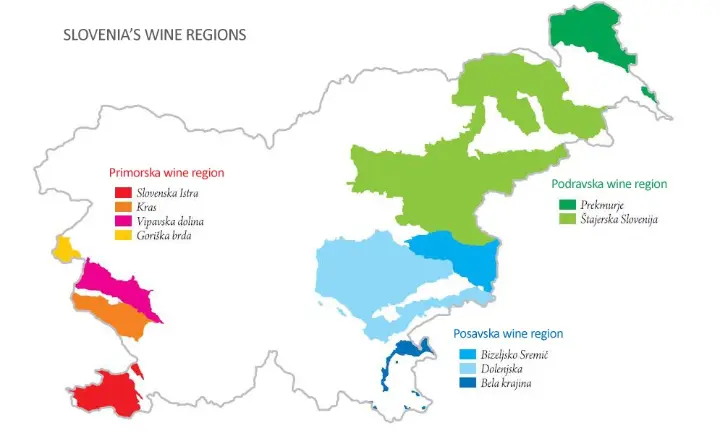
Primorska (the coastal area)
Bordering the Italian region of Friuli-Venezia Giulia, Primorska is the country's most influential wine region. This is the absolute center of the Slovenian avant-garde and the place where most top winemakers are located within a stone's throw of each other. The region is further subdivided into four sub-regions: Goriska Brda, Vipavska Dolina, Kras (Karst), and Slovenska Istra.
Climate & microclimate
Primorska is defined by the intense interplay between a sub-Mediterranean climate and Alpine influences. The warm airflow from the Adriatic Sea ensures optimal physiological ripening of the grapes. However, this potential for overripeness is perfectly countered by the Burja (Bora): a harsh, northeasterly downdraft that rages through the valleys from the Alps at speeds exceeding 150 km/h. This wind has two crucial oenological effects:
Sanitary prevention: The wind dries the vines immediately after rainfall, drastically reducing the need for copper and sulfur treatments in the vineyard.
Skin thickening: In response to the wind, the grapes develop thicker skins, resulting in a higher content of tannins, polyphenols, and aromatic precursors — essential for (prolonged) skin maceration.
Geology & soil characteristics
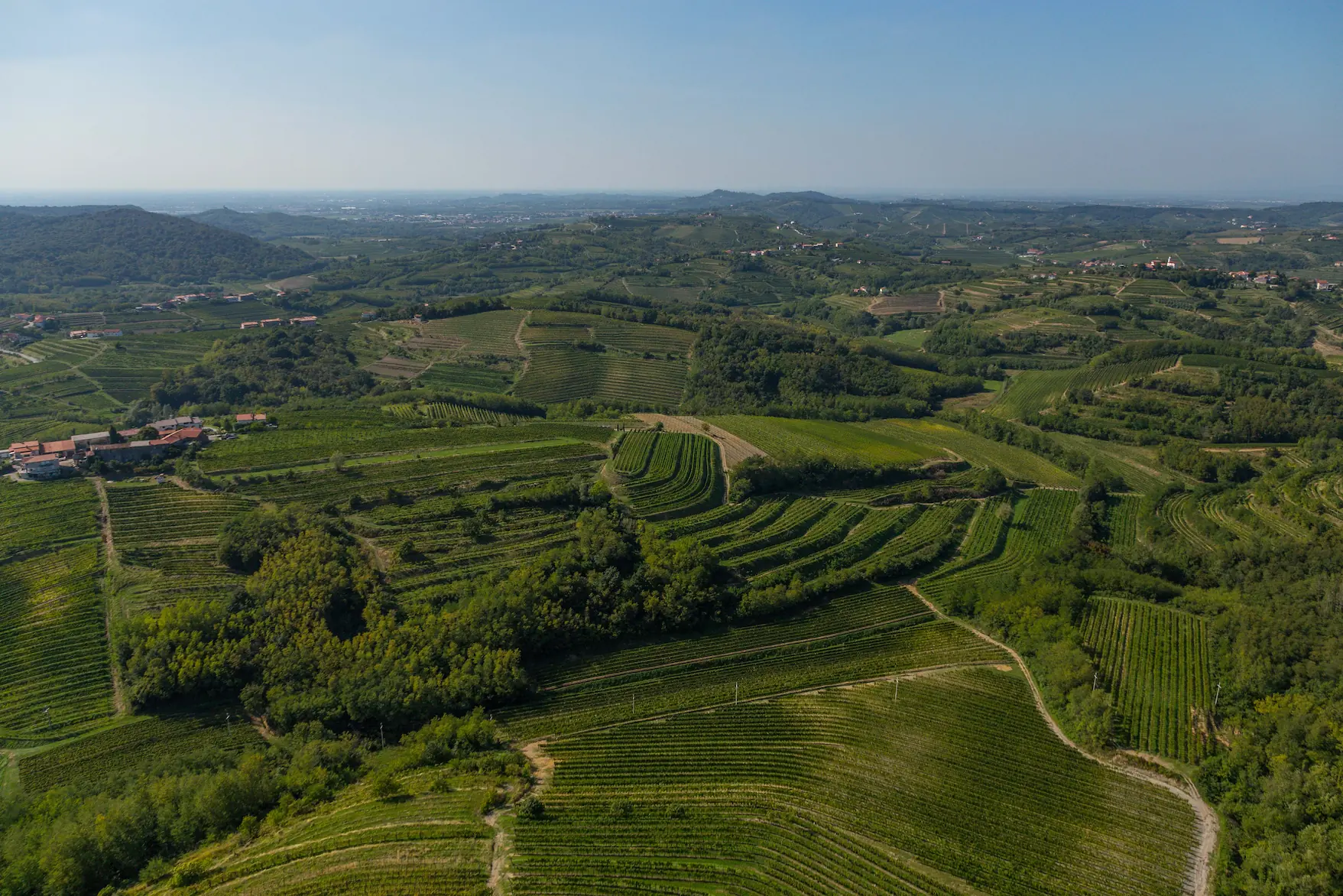
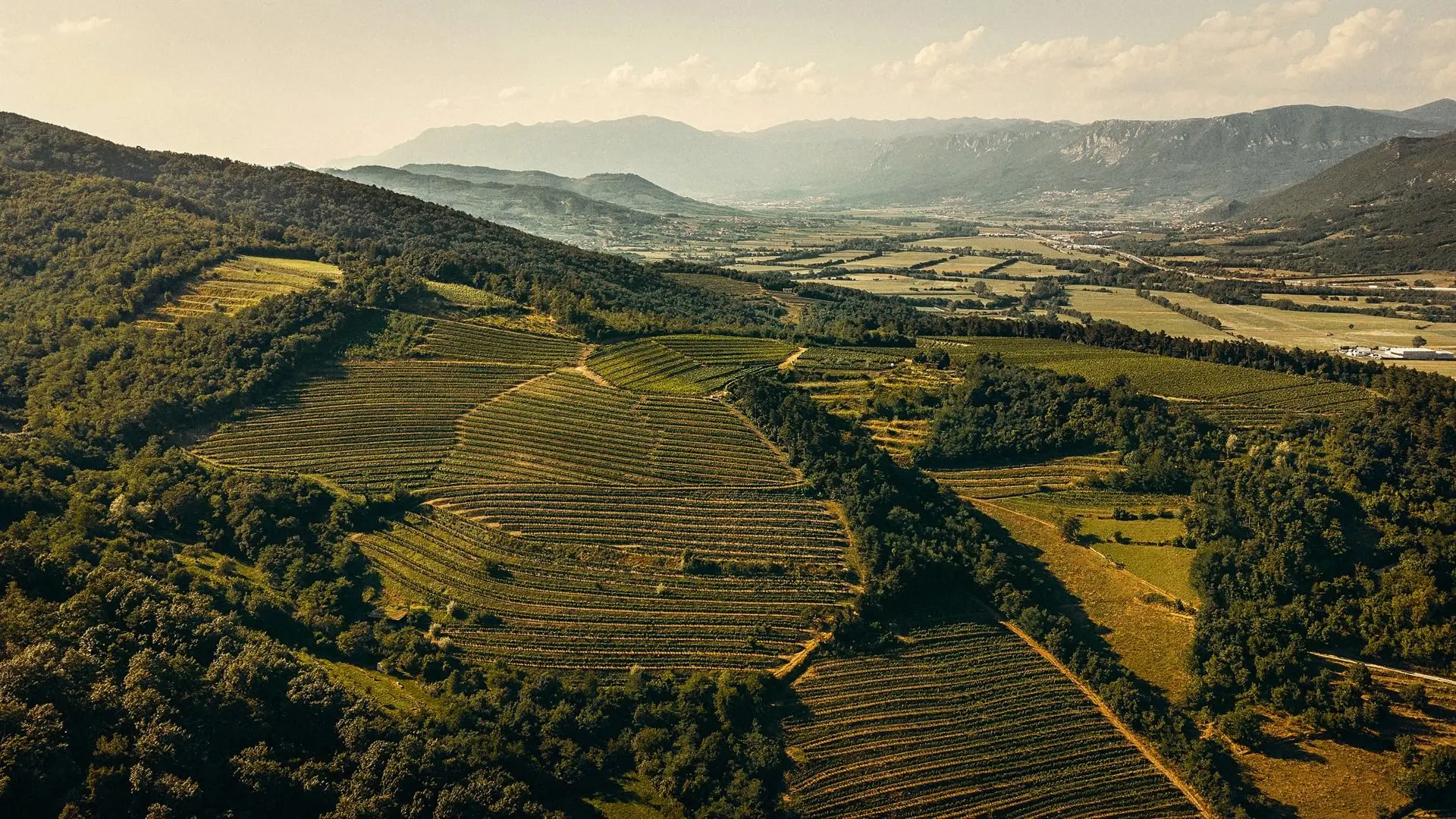
The signature soil of Primorska (particularly in the sub-regions of Goriška Brda and Vipavska Dolina) is flysch, locally known as opoka. This is an Eocene sedimentary rock consisting of alternating thin layers of calcareous marl and sandstone. In the Kras (Karst) sub-region, the soil changes radically to the iconic terra rossa (jerovica): an intensely red, iron- and aluminium-rich clay soil resting on a pure limestone foundation.
Podravje (Drava-valley)
Located in the northeast, bordering Austria and Hungary, lies Podravje. The sub-region of Štajerska Slovenija (Slovenian Styria) is known worldwide for its steep, terraced vineyards and its razor-sharp, aromatic precision.
Climate & microclimate
Podravje has a distinct continental climate with hot, relatively dry summers and harsh winters. Crucial to the wine quality here are the extreme temperature differences between day and night, influenced by cold air currents from the Alps and the warming influence of the Pannonian Plain. This ensures a slow ripening of the grapes, allowing the aromatic complexity to develop to its fullest while the natural acidity is perfectly preserved.
Geology & soil characteristics
The geological structure of Podravje is a patchwork of marine sediments, marl, sandstone, and clay. The soils are generally very calcareous, which contributes to the bright, mineral focus of the wines. In specific zones, such as the slopes of the Pohorje massif, we also find metamorphic rocks such as silicate and granite. These acidic soils give the wines a completely different, almost crystalline tension.
Posavje (Sava-valley)
Posavje, located in the southeast along the Croatian border, is historically the most fragmented and small-scale wine region of Slovenia. It is the least known of the three wine regions. Today, Posavje is a breeding ground for young winemakers who focus on light, lively, and terroir-true wines.
Climate & microclimate
The climate is temperate continental with sub-Pannonian influences. Posavje receives more precipitation on average than the other regions, but the many microclimates in the narrow river valleys of the Sava and the Krka provide sufficient shelter and heat accumulation on the south-facing slopes.
Geology & soil characteristics
Wine regions throughout Slovenia are hilly. However, the hills in the Sava Valley take the crown. Mechanized vineyard work is virtually impossible here. In terms of soil composition, we find limestone and dolomite, covered with deposits of marl, sandy clay, and alluvial sediments. The soils are generally more nutritious than the poor opoka in the west, resulting in wines with a juicy, fluid texture and lower tannin concentrations.